Service · Bali & Jakarta
Himalayan Salt and Onyx Sauna Features in Bali
A backlit salt or onyx wall is the detail that turns a functional sauna into a room guests photograph. It is also the detail most often done badly: panels lit unevenly, fixtures that cannot survive the heat, or stone chosen without checking how it looks when light passes through it.
We design and build salt and onyx features as part of sauna renovations and new builds across Bali and Jakarta.
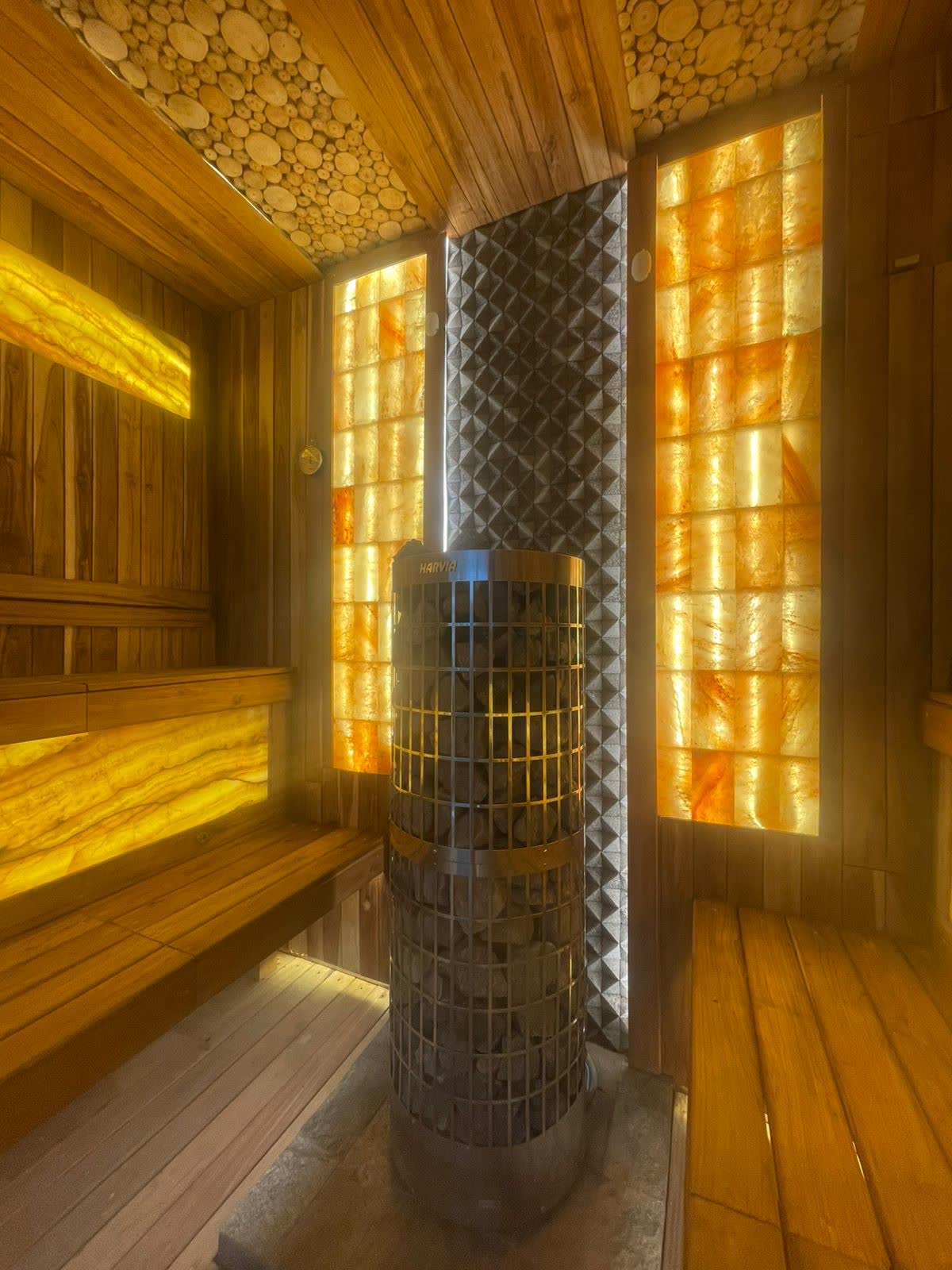
Onyx: the material that only works backlit
Natural onyx is translucent. Under front lighting it reads as ordinary stone; lit from behind it becomes amber, honey and gold, with the mineral veining acting as the pattern. That is why onyx is specified as a lighting element, not a cladding — the light source, diffusion gap and panel thickness are as important as the slab itself.
We use onyx in bench fronts, wall niches and full feature panels. Because every slab differs, panels are selected and laid out for the room rather than ordered by the square metre, so the veining runs the way you want it to when it is lit.
Himalayan salt: character with conditions
Salt bricks and panels give a warmer, softer, pinker glow than onyx and carry an association with wellness that guests recognise immediately. They suit relaxation rooms, salt corners and feature walls.
Salt has one hard rule: it must stay dry. Salt and water do not coexist, so we place salt away from where water is thrown, detail the surrounding surfaces for it, and specify the room's ventilation accordingly. In a humid climate this is a design decision, not an afterthought. Where a client wants salt in a wet zone, we say plainly that it is the wrong place for it and propose onyx instead.
- Salt suits dry heat rooms, relaxation areas and feature walls
- Onyx handles the wetter, hotter positions and the areas near the heater
- Both need a controlled gap and heat-rated LED for even, flicker-free light
- Fixtures must be serviceable — panels come off without rebuilding the wall
Lighting is the actual craft
The failure mode of a backlit wall is visible hotspots: bright bands where the LED sits and dull patches between. Avoiding that means the right diffusion distance, the right strip density and consistent colour temperature across the whole run, then testing it in the dark before the panels are finally fixed.
We use warm, indirect light throughout — under benches, behind backrests and inside niches — so the room is lit by its surfaces rather than by fittings guests have to look at.
What it does for the property
Commercially, these features earn their place in two ways. They photograph well, which matters for listings, spa menus and social content. And they make the room feel like a destination worth booking rather than an amenity that happens to exist, which is what supports paid sessions and packages.
They are also the easiest part of a renovation to phase. Where a budget cannot cover everything at once, timber and heat come first and a feature wall can follow in a later stage.
Frequently asked questions
Can Himalayan salt be used inside a wet sauna?
Not where water is thrown or splashed — salt dissolves. We place salt in dry positions and use backlit onyx in the wetter, hotter areas of the room.
Can salt or onyx be added to an existing sauna?
Usually yes, if there is depth in the wall for the light gap and access for wiring. This is a common renovation upgrade and we assess it from photos and dimensions.
Does backlit stone need special maintenance?
Keep panels dry where they are salt, dust them gently, and expect LED strips to be replaceable. We design panels so they can be removed for service without rebuilding the wall.
Send photos, get a straight answer.
Location, approximate dimensions and what the room needs to do — that is enough to start.